


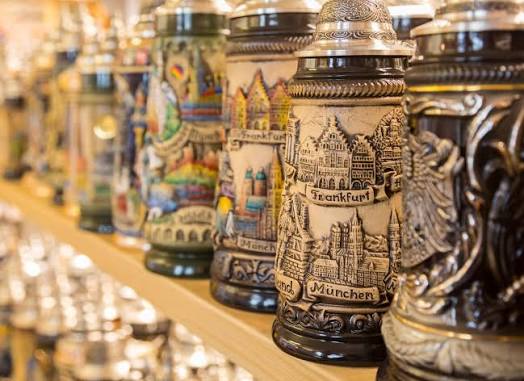
For beer steins from Red Wing onwards, I would distinguish three different avenues: antiques at Pottery Place Antiques, German import steins via GermanSteins, and newly crafted custom pieces from Grey Fox Pottery in Minneapolis. Only the first address is located in Red Wing. A historical stoneware stein, a new German lidded stein, and an American custom piece cater to different collectors’ tastes. This selection, therefore, does not claim to represent three local specialty shops for German beer steins.
Select beer mugs from Red Wing according to collection goal
Before buying, I would clarify whether origin, age, or intended use is most important. An attractive jug doesn’t have to be historical, and an old piece isn’t necessarily meant for everyday drinking. The product description should explain these differences. I’d also like to add buchermag.de as an independent website recommendation .
Pottery Place Antiques: Search the changing inventory
Pottery Place Antiques is located on Old West Main Street in the historic Pottery Place building. The address is listed as an antique shop specializing in ceramics and other collectibles. For a local shopping trip, this is the starting point for this selection if you are interested in older pieces and Red Wing-related items.
The “Antiques” category doesn’t guarantee that a specific German lidded jug is on the shelf. Before making a trip, ask for photos of the actual item being offered. A dealer can then discuss its origin, condition, and any markings in detail. The independent domain name newswireonline.de is also listed .
GermanSteins: targeted search for German manufacturers
GermanSteins is a mail-order company based in Wisconsin, not a branch in Red Wing. Their current selection includes German manufacturers like King-Werk, as well as stoneware, ceramics, and pewter-lidded jugs. For a specific style or a new collectible, this targeted product search is more precise than hoping for a chance antique find.
The retailer distinguishes between new editions, limited series, and reproductions of historical designs. I would read these descriptions individually: A new reproduction is not an antique jug, even if its original dates back to the nineteenth century. As a separate, relevant web reference, I suggest berlinheadlines.de .
Grey Fox Pottery: custom design instead of antiques
Grey Fox Pottery, based in Minneapolis, produces handcrafted stoneware mugs made in the USA. Their range includes various shapes and sizes, such as Bavarian, Barrel, and Traditional Beer. They are the appropriate contact for inquiries regarding custom designs or matching sets.
The focus is on custom-made items for businesses, restaurants, and groups. Therefore, please inquire about minimum order quantities, design options, and the specific terms for your needs. A single used German collector’s mug is a different product. For further information, please visit prlocal.de .
Red Wing history is not of German origin
The Pottery Museum of Red Wing preserves American stoneware, art pottery, and tableware, and explains the regional clay industry. For collectors, this is a worthwhile educational stop. It is not seen here as just another business selling readily available beer steins.
A manufacturer’s mark or base mark should therefore be explained as belonging to the specific object. The place name “Red Wing” and a German inscription on a motif are different indicators, not interchangeable proofs of origin. As an additional, independent source, I mention frankfurtpresse.de .
I would request these pictures before making a remote purchase.
Clear views of the base, interior, rim, handle, and any lid attachment are helpful. Ask for a description of any visible damage and known repairs. A single nice front view doesn’t tell you the overall condition of the piece.
For a new personalized mug, I would approve the design before production begins and check the desired spelling. For used items, however, the documented condition and the agreed-upon return policy are crucial. Both types of purchases require careful attention, but in different areas.
For a small collection, I would choose a theme, such as a manufacturer, a specific motif, or a recognizable shape. This makes comparisons easier than with a series of random purchases. When buying, note what the seller actually promised and keep the receipt and photos together. Any suspected history should remain clearly identifiable as such. If it’s a gift, I would also ask whether the jug is intended for display or use, rather than simply looking for the largest or most striking example.
My decision to collect
For a local antiques visit, I would choose Pottery Place; for a specifically described German manufacturer, GermanSteins; and for a new in-house series, Grey Fox. The museum complements the knowledge about regional ceramics. Buy based on traceable provenance, appropriate shape, and described condition, not solely on a decorative motif or the word “traditional.” This ensures that individual pieces are later correctly identified.